Dan McNeill, known as Gwiisihlgaa, gears up in his scuba attire, grabs his two-foot rake, and readies his catch bag as he plunges into the pristine waters surrounding Haida Gwaii, an archipelago located off the northern coast of British Columbia. His mission is to gather sea urchins, using his metal tool to scoop up these spiny marine invertebrates and fill his bag.
This underwater venture is part of McNeill’s role as the marine stewardship director with the Council of the Haida Nation, contributing meaningfully to the efforts aimed at safeguarding the region’s diminishing kelp forests.
“Kelp is vital for our sustenance,” he emphasizes regarding this significant brown algae. “It is intertwined with our identity and integral to our culture.”
Nurturing Seafood for Growth
McNeill’s underwater expeditions are part of the “Chiix̱uu Tll iinasdll: Nurturing Seafood to Grow” initiative, which aims to restore kelp forest regions in Gwaii Haanas from 2017 to 2021.
The collection of urchins is intended to rebalance the local food web, as sea otters, once key predators of these urchins, faced extinction during the maritime fur trade of the 18th and 19th centuries.
In the absence of these predators, urchin populations have surged, resulting in extensive kelp overgrazing—a resource of cultural significance to the Haida Nation and a crucial element of global biodiversity.
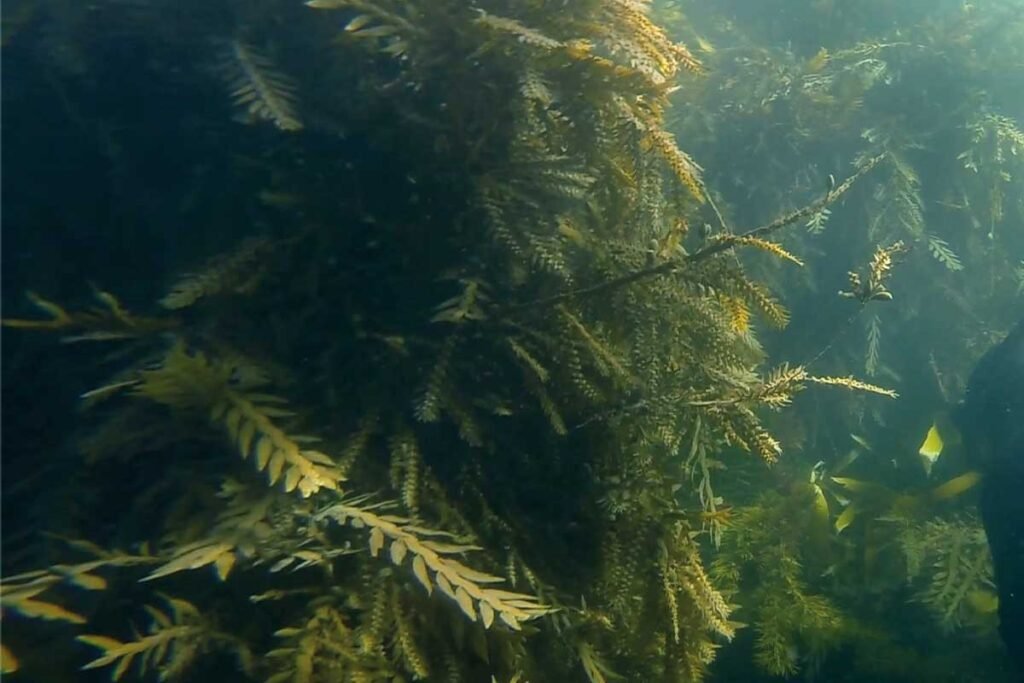
Kelp thrives along coastal areas worldwide, providing nourishment and habitat to vital marine life. Similar to terrestrial forests, kelp’s photosynthetic activity captures carbon dioxide, nitrogen, and phosphorus while releasing oxygen—an essential process in mitigating climate change. With an annual contribution exceeding $500 billion to fisheries production and nitrogen removal, its ecological importance is undeniable.
The plight of kelp, however, extends beyond just the Haida Nation. Over the last five decades, more than half of the world’s kelp forests have declined, threatening coastal ecosystems, water quality, and atmospheric carbon balance.
A Neglected Concern
Marine gardens are vanishing at alarming rates due to habitat destruction, overharvesting, overgrazing, and pollution. Additional challenges arise from climate change and sedimentation attributed to runoff from deforestation, dredging, or severe weather events. Despite decades of ocean conservation efforts, the drive for kelp preservation remains relatively nascent.
“In comparison to land, the ocean often receives less attention, and even within marine environments, there is a strong emphasis on coral conservation,” explains Aaron Eger. He leads the Kelp Forest Alliance, an organization dedicated to protecting kelp habitats globally. “Biases influence where conservation funding and energy are allocated.”
This underrepresentation was analyzed in a 2021 study published in the Frontiers in Marine Science journal, revealing a stark contrast in mentions: for every reference to kelp forests, seagrass meadows were mentioned seven times, salt marshes twenty times, coral reefs thirty-eight times, and mangroves forty-three times.
A Worldwide Call to Action
In 2023, Eger’s organization initiated the Kelp Forest Challenge, a global initiative urging individuals, corporations, and governments to commit to restoring 1 million hectares and protecting 3 million hectares of kelp forest habitat by 2040.
Restoration efforts begin with identifying the causes of decline; managing urchin populations and purifying polluted waters can help protect vulnerable kelp populations, while seeding or relocating young kelp can facilitate the growth of new forests.
“It’s still early days, but we’re making progress,” Eger indicates regarding the pledges tracked through a dashboard created by the organization for public transparency. “However, achieving our goals will necessitate more global commitment and a comprehensive restoration strategy.”
Countries like Japan and Korea possess extensive histories of restoration projects, while places like California and Washington are establishing frameworks for conservation and restoration. Currently, the Kelp Forest Challenge stands out as the sole international conservation initiative of its kind.
An Interconnected Network
For the Haida Nation, ethical values guide their actions—the principle of Gina ‘waadluxan gud ad kwaagid emphasizes interconnectedness, highlighting the delicate balance of ecosystems and the significance of every component within the biosphere. McNeill refers to this principle when discussing the challenges of kelp loss.
“The sea otter was a key player in regulating urchin populations, and their absence leads to major shifts in the ecosystem,” McNeill remarks. “This illustrates the profound interconnectedness of our natural systems.”
This article originally appeared in the April 2025 edition of The Windows Club magazine.