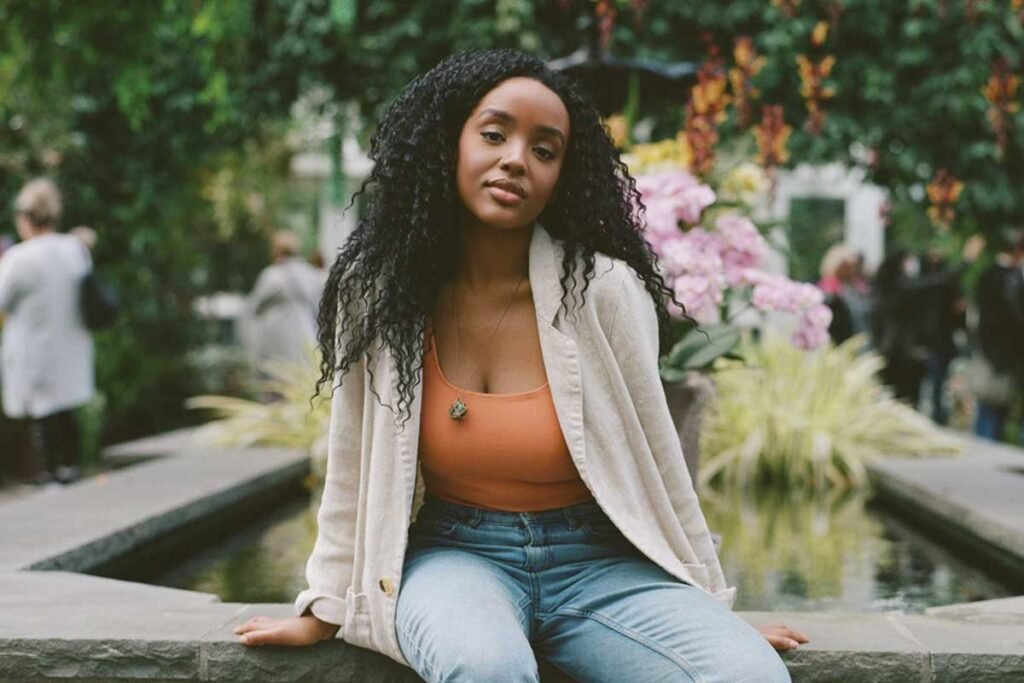
Wanjiku “Wawa” Gatheru, who reclaimed the title of “environmentalist” at just 19, grew up immersed in nature, digging in the soil alongside her mother and grandmother in the serene Quiet Corner area of Northeastern Connecticut. As the daughter of Kenyan immigrants, her lineage stretches back to generations of farmers, reflecting a long-standing connection to the land.
Even with this profound relationship to nature, Gatheru faced challenges in identifying with the environmental movement in her early years, which later led her to launch the national nonprofit Black Girl Environmentalist (BGE).
“I assumed that being an environmentalist required wealth, outdoor gear from brands like Patagonia, and activities foreign to my family’s lifestyle,” Gatheru recalls. “I couldn’t see how my gardening or outdoor experiences related to broader environmental concerns.”
A significant shift occurred when she took a high school environmental science class, which at first did not ignite her enthusiasm. A key segment on environmental justice made the concept of climate change more personal and immediate.
“This class reshaped my perception of environmental issues, highlighting the personal impacts of climate change,” Gatheru explains. “I grasped how the climate crisis exacerbates existing social problems and realized any social-impact work I desired to pursue must begin with climate initiatives.”
Climate Injustice in Black Communities
Research has shown that climate change does not affect all populations equally, with marginalized groups often suffering the most severe repercussions, yet they remain largely absent from environmental dialogues.
A 2018 study in the American Journal of Public Health highlights that Black individuals are exposed to harmful particulate matter—like soot and smoke—1.54 times more than the general American populace.
Despite representing just 13.6% of the U.S. population, Black Americans disproportionately live near coal plants, oil refineries, and other industrial areas, where environmental hazards from noise and emissions directly affect their health.
The resulting health disparities are grave; Black individuals suffer higher mortality rates from diseases tied to environmental factors, with Black women and girls facing even greater health risks due to overlapping racial and gender discrimination.
“Women in general bear the weight of the climate crisis and environmental injustices, exacerbated by the continuing impacts of patriarchy on our rights,” Gatheru notes. “For women of color, especially Black and Indigenous women, the systemic issues of racism and colonialism further compound the environmental challenges we face.”
Meanwhile, the environmental sciences sector remains one of the least diverse within STEM fields. In 2021, only 138 Black women earned degrees in environmental science compared to 2,945 White women and 2,248 White men.
This lack of representation is often described as “the green ceiling,” reflecting that despite making up nearly 40% of the U.S. populace, people of color account for less than 16% of the workforce in environmental organizations.
Gatheru found this disparity upsetting as a teenager; she stumbled upon the topic of environmental justice and noticed a lack of discourse around what she viewed as “the most pressing issue of our time.” This realization fueled her desire to enact change.
The Environmental Movement’s Narrative Challenge
Upon entering the environmental movement at the age of 15, Gatheru quickly noticed she was typically the youngest attendee by at least twenty years and often the only Black participant. She also encountered skepticism regarding her commitment to the cause.
Keenly aware of the need for younger, diverse voices in the movement, Gatheru felt compelled to remain active while also encouraging others to join her. This sense of urgency led to the creation of BGE, aimed at reshaping the narrative surrounding environmentalism.
“A Google search for ‘environmentalist’ reveals a startling lack of representation for individuals like me,” Gatheru points out. “While that portrayal isn’t inherently negative, we need diverse representations of what an environmentalist looks like, who they are, and the work they do.”
In addressing this narrative gap, BGE focuses on creating pathways for Black girls, women, and gender-expansive individuals to enter the climate sector and encourages their ongoing involvement through three core strategies:
1. Green workforce development, which leverages targeted recruitment to build a pipeline for newcomers to the climate sector.
2. Community empowerment, featuring both in-person and virtual events that connect attendees, fostering their commitment to the movement.
3. Diversity and inclusion through narrative transformation, aimed at inspiring future activists to see themselves as part of the environmentalist community.
“With BGE, my aim is to ensure the broader environmental community acknowledges that Black women and women of color have long played critical roles in these efforts,” Gatheru notes. “The organization serves as a platform for nurturing the next generation of leaders in environmentalism and climate action, who have not yet received the recognition they deserve.”
Inspiring Future Climate Leaders
BGE offers various programs, including the Hazel M. Johnson Fellowship, a paid 10-week internship focusing on climate initiatives, alongside the HUB program, which hosts community-building events in 12 U.S. cities.
The overarching goal of these initiatives is to create networks where aspiring environmentalists can connect with others equally dedicated to impactful work. Additionally, as young individuals grapple with eco-anxiety related to climate change, these spaces provide them an emotional outlet.
Gatheru emphasizes that at HUB events, those experiencing eco-anxiety find solidarity. Connecting with others facing similar worries can be immensely therapeutic.
“One effective method for alleviating climate anxiety is to acknowledge it and foster community through action,” she suggests. “When we unite and harness our collective strength, we can enact real change in our communities and positively influence the future.”
This article was originally published in the September-October 2024 issue of Thewindowsclubs magazine (US edition).