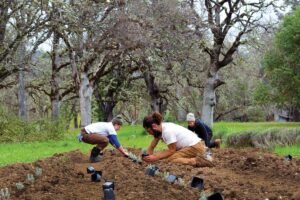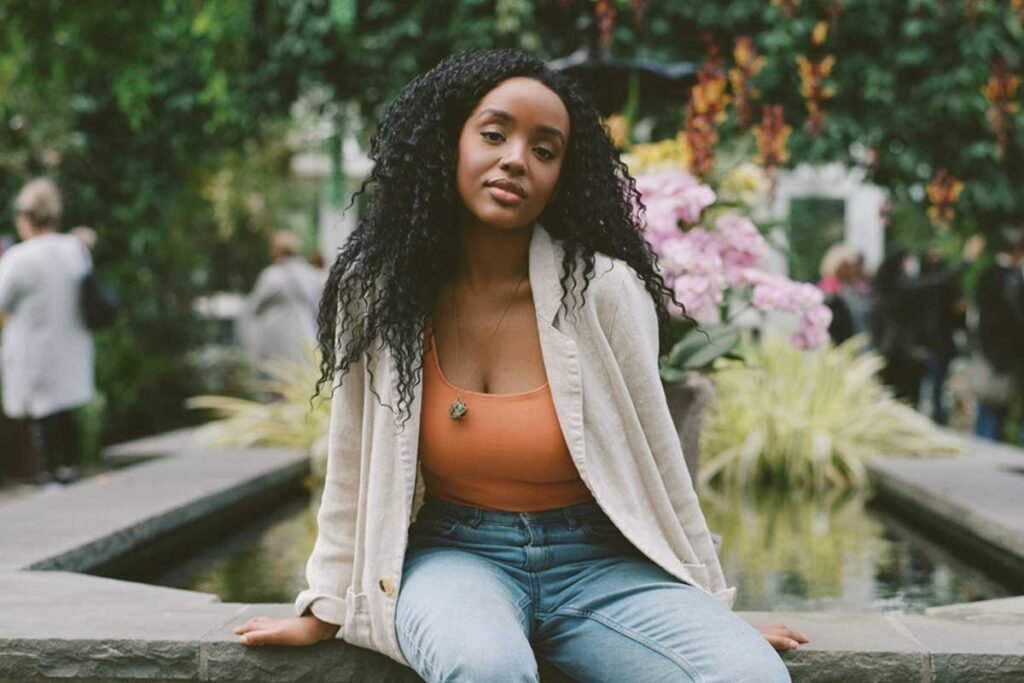
Wanjiku “Wawa” Gatheru, who took ownership of the label “environmentalist” at the age of 19, has roots that trace back to her childhood spent in Northeastern Connecticut’s Quiet Corner region. There, she cultivated her love for gardening with her mother and grandmother. As the daughter of Kenyan immigrants, her family lineage has a history of farming that stretches back through generations.
Although her upbringing allowed her to forge a strong bond with nature, Gatheru, who established the national nonprofit Black Girl Environmentalist (BGE), initially found it challenging to connect with the mainstream environmental movement.
“I perceived environmentalism as a privilege associated with wealth, hiking gear, and brands like Patagonia—things my family couldn’t afford and activities we didn’t partake in,” Gatheru reflects. “I wasn’t aware that my experiences with gardening and the outdoors could relate to environmental advocacy.”
The pivotal moment that redirected Gatheru’s path toward becoming an influential leader occurred during a high school course in environmental science. An exploration of environmental justice resonated deeply with her.
“That class altered my perspective on environmental challenges by showcasing how climate change affects us directly,” she shares. “I recognized that the climate crisis exacerbates existing social issues. I realized if I wanted to engage in meaningful social change, I had to prioritize issues related to climate.”
Climate Inequities in Black Communities
Research has shown that the impacts of climate change are not felt equally across different demographics, with marginalized communities often bearing the brunt of its adverse effects. A study published in the American Journal of Public Health in 2018 revealed that Black individuals are exposed to particulate matter—substances like soot and dust—at a rate 1.54 times higher than the broader U.S. population.
Despite representing only 13.6 percent of the American population, Black Americans are disproportionately in proximity to environmentally hazardous sites such as coal plants and oil refineries, exposing them to elevated noise, odors, and emissions.
This inequity leads to grave consequences. Health-related mortality rates connected to environmental factors are higher among Black individuals, with Black women and girls facing even greater risks due to intersecting racial and gender biases.
“Women, in general, suffer the most from the repercussions of the climate crisis and environmental injustices, compounded by the pressures of patriarchy,” Gatheru explains.
“When considering women of color,” she adds, “the layers of systemic racism and colonialism uniquely influence how we experience environmental threats and engage politically.”
Environmental science remains one of the least diverse fields within STEM. In 2021, only 138 Black women graduated with degrees in environmental science compared to 2,945 White women and 2,248 White men.
This lack of representation highlights the phenomenon known as “the green ceiling,” where people of color, despite comprising nearly 40 percent of the U.S. populace, represent less than 16 percent of the workforce in environmental organizations.
Gatheru continues to feel the weight of these disparities, and when she first encountered these issues as a teenager, she felt a sense of helplessness. It was disheartening to find that critical discussions on environmental justice were largely absent. Determined to take action, she resolved to make a change.
Challenges in the Narrative of the Environmental Movement
Upon joining the environmental movement at the age of 15, Gatheru quickly noticed she was typically the youngest attendee by a margin of at least two decades and often the sole Black individual present. The reaction to her participation was frustrating; many seemed surprised that she was concerned about environmental issues.
Feeling a sense of obligation to remain in the movement—due to the evident necessity for younger and more diverse perspectives—she established BGE as a means to reshape the narrative.
“A quick online search for ‘environmentalist’ yields few representations of someone who looks like me,” Gatheru states. “This is not inherently negative but reflects a need for diverse narratives to truly represent who an environmentalist is, including various backgrounds, experiences, and roles.”
BGE addresses this narrative gap by creating pathways for Black girls, women, and gender-diverse individuals to engage in climate activism and encouraging them to remain involved. The organization has adopted three strategic approaches:
1. Green workforce development focuses on recruitment initiatives that pave the way for participation in the environmental sector.
2. Community empowerment provides both in-person and virtual events to help participants connect, fostering collective involvement in the movement.
3. Diversity and inclusion via narrative transformation aims to inspire future activists to identify as environmentalists.
“Through BGE, I strive to ensure the broader environmental community acknowledges the longstanding contributions of Black women and women of color,” Gatheru emphasizes. “My goal is to support and cultivate a new generation of climate leaders who have historically gone unrecognized.”
Nurturing Future Leaders in Climate Advocacy
The initiatives of BGE range from the Hazel M. Johnson Fellowship, a 10-week paid climate internship, to the HUB program, which organizes community-building events across 12 cities in the United States.
Each program is designed to create opportunities for young people to connect with fellow environmental advocates, providing an outlet for the eco-anxiety many young individuals face regarding climate change.
During HUB gatherings, Gatheru emphasizes that those dealing with eco-anxiety are not alone; sharing experiences and forming communities around these concerns can be highly therapeutic.
“Recognizing climate anxiety and actively fostering community through action are among the best strategies for overcoming it,” Gatheru highlights. “By uniting and building collective power, we can positively influence our communities and future generations.”
This article was initially published in the September-October 2024 edition of Thewindowsclubs magazine (U.S. version).