For those familiar with oysters, it’s no secret that the northern U.S. coasts are celebrated for their exquisite shellfish. Enthusiasts rave about Beausoleils and Wellfleets from the Atlantic, as well as Kumamotos and Hama Hamas from the Pacific.
However, bring up oysters from the Southeast, and you might encounter skepticism; many people wrinkle their noses and express disdain. Who would want subpar oysters from warmer waters? I must admit to being one of those skeptics.
That was until I had an enlightening experience with Shark Bite oysters harvested from New Smyrna Beach in Florida. During an Oyster South symposium in St. Augustine, I encountered a dedicated group of entrepreneurs striving to enhance the reputation of Southern oysters, support their local communities, and improve the environment.
They graciously invited me to spend a couple of days on the farms. With rubber boots and sunscreen ready, I enthusiastically set out for the Atlantic and Gulf waters.
Day One: On the Gulf
On a gorgeous morning, Reed Smith of Calusa Oyster Company greets me in South Tampa Bay. His young partner, Reid Ballard, pilots us towards their leasehold as Smith shares that he and his wife Maura stumbled upon the idea of oyster farming and thought, “Why not give it a try?”
“Seafood has always been a family staple, so it felt like a natural direction,” Smith adds, gesturing at the sparkling waters and clear skies. “Not to mention, the view beats any office.”
Oyster farming in the Southeast typically occurs off the bottom in estuarine areas where nutrient-rich tides flow continually. We observe floating cages ahead, each containing mesh bags filled with oysters at various growth stages.
Today’s focus is harvesting. Lifting a cage and extracting a flattened bag proves to be quite an effort. Sea life thrives around the cage structures, evidence of seaweed, crabs, and small fish. Smith remarks, “Our farm has become a floating reef.”
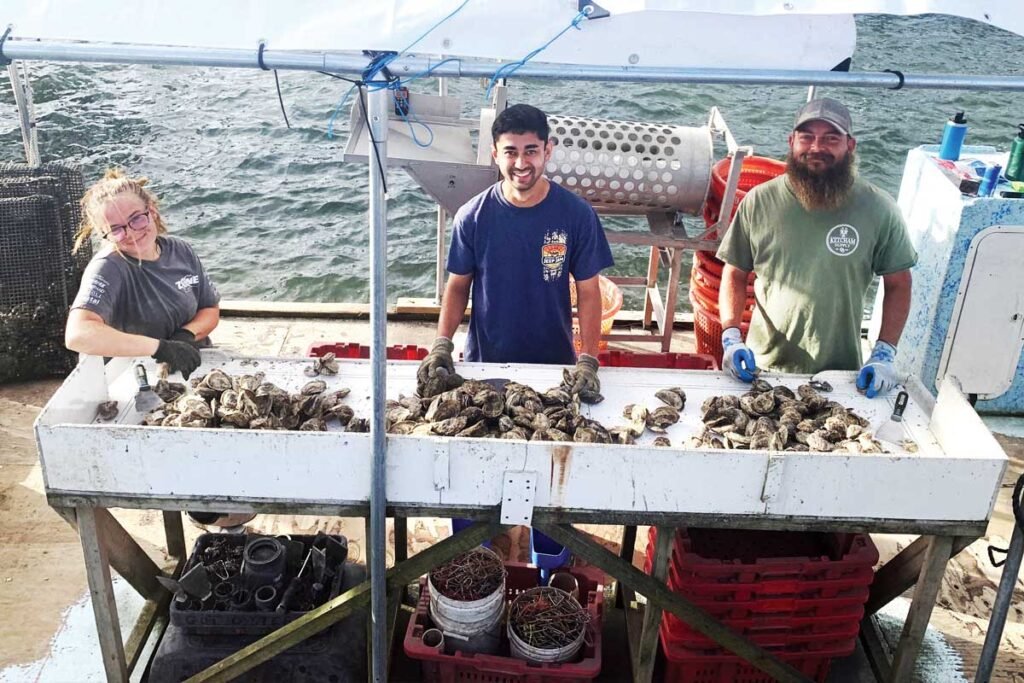
The oysters are tumbled in a rotating perforated cylinder, sorting the smaller ones from those ready for sale. Some of the smaller oysters will be donated to a local restoration initiative, Oyster River Ecology, to boost wild populations essential for the ecosystem’s health. Smith differentiates between the two: “cultivation” is for harvesting, while “restoration” benefits nature.
The labor-intensive tasks of scraping and sorting provide a chance to delve into the personal motivations behind the work. Ballard speaks passionately: “Growing oysters that sequester carbon, clean water, and foster habitats has opened my eyes to the ongoing efforts required for environmental sustainability.”
In closing, Smith reflects, “It’s a joy and a privilege to run a business that brings so much happiness to others. Do you ever see photos of unhappy people while enjoying oysters?”
Day Two: On the Atlantic
In the Indian River Lagoon, Nicolette Mariano of Treasure Coast Shellfish greets me. As we glide over clear waters, Nicolette shares that her interest in aquaculture began as a 14-year-old volunteer at the Florida Oceanographic Coastal Center. With a Bachelor of Science degree backing her passion, she states, “I relish the early mornings on the water, soaking in the sights and sounds—the ospreys, dolphins, and manatees emerging for air.”
Back at the dock, her team prepares to sort the oysters, tossing damaged ones into shallow waters where fish eagerly feed. Mariano highlights the ecological advantages: “The oysters establish a unique three-dimensional habitat for young marine life; the farm is essentially a small ecosystem on its own. Plus, we’ve created numerous jobs in our community across all age groups.”
Challenges in the Industry
Contending with marine mortality events and navigating complex regulations can be tough, but the primary threat remains the weather. Hurricanes can devastate oyster farms, as Smith at Calusa experienced when he lost an entire year’s harvest to Helene. “It demands persistence, creativity, resilience, and adaptability. We find ways to adapt and forge ahead,” he explains.
Community backing is evident through the Florida Shellfish Aquaculture Association, where Executive Director Adrianne Johnson describes their goals: “Shellfish farmers are dedicated, innovative, and incredibly hardworking individuals. We aim to champion this promising southern industry and invite everyone to participate. Sample a southern oyster, support local farmers, and experience the difference.”
Despite the obstacles, Ballard from Calusa conveys the sentiment of many farmers: “This job is irreplaceable; I wouldn’t trade it for any sum of money.”
This article first appeared in the November/December 2025 issue of Thewindowsclubs magazine (U.S. edition).