For anyone familiar with oysters, it’s no secret that the northern U.S. coastlines are celebrated for their exquisite shellfish varieties. Oyster lovers rave about the Beausoleils and Wellfleets from the East Coast, while the Kumamotos and Hama Hamas from the West Coast receive similar acclaim.
However, when it comes to oysters from the Southeast, many people express skepticism, wrinkling their noses and shaking their heads. Oysters from warmer waters? They don’t belong on my ice-filled platter. I must admit, I once held that belief.
But a chance meeting with Shark Bite oysters from New Smyrna Beach, Florida, changed everything for me. While attending an Oyster South symposium in St. Augustine, I encountered passionate entrepreneurs determined to elevate the reputation of Southern oysters, provide value to their communities, and improve local ecosystems.
I received generous invitations to spend several days working on the oyster farms. Armed with rubber boots and layers of sunscreen, I eagerly made my way to the waters of the Atlantic and the Gulf.
It’s all good
The Monterey Bay Seafood Watch has listed farmed oysters on their Super Green List, highlighting their benefits to both health and the environment. Packed with protein and numerous vitamins and minerals, they support brain health, help prevent bone loss, and boost immunity. Furthermore, oyster aquaculture contributes significantly to improving water quality, enhancing habitat creation, and stabilizing shorelines.
If you want to contribute positively, be conscious of your food sources, buy local, and support organizations that promote clean water.
Day one: On the gulf
“Do you ever see people not smiling while eating oysters?”
As the sun rises over South Tampa Bay, Reed Smith of Calusa Oyster Company greets me warmly. His associate, Reid Ballard, takes us out to their leasehold, where Smith recounts how he and his wife, Maura, serendipitously discovered oyster farming and thought, “Why not?”
“My family has always loved seafood, so it made sense to pursue this path,” Smith shares, gesturing toward the serene waters and clear skies. “Besides, who can complain about this office?”
In the Southeast, most oyster farming occurs “off-bottom” in estuaries that receive constant tidal nourishment. We see floating cages ahead, each containing mesh bags filled with oysters at different growth stages.
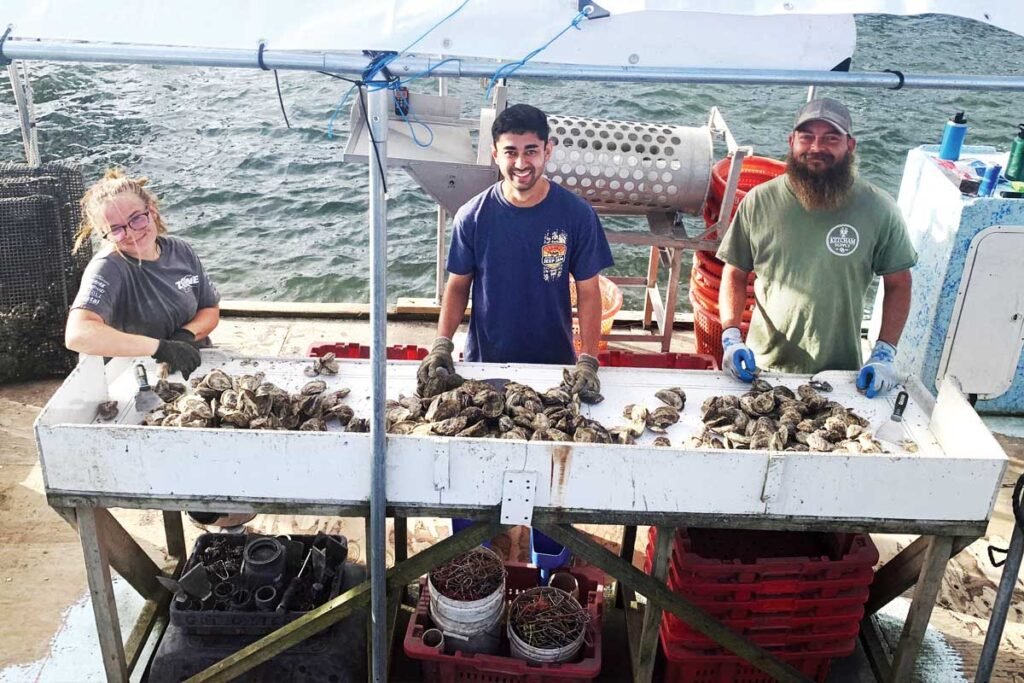
Our main task for the day is harvesting. Raising a cage out of the water and removing a flattened bag proves to be quite a workout. Various sea creatures cling to the cages, including seaweed, crabs, and small fish. As Smith points out, “Our farm has become a floating reef.”
The contents of the bags are passed through a rotating perforated cylinder, which separates the smaller oysters and channels those ready for harvesting. Some of the smaller ones will be donated to the Oyster River Ecology, aiding local wild populations essential for water health. Smith clarifies the distinction: “cultivation” is meant for eating, while “restoration” is aimed at environmental health.
The somewhat monotonous process of scraping and sorting allows us to delve into the personal motivations behind this lifestyle. Ballard expresses his passion: “Cultivating an animal that captures carbon, purifies water, and fosters habitat growth has opened my eyes to the work needed to maintain a clean environment.”
Smith encapsulates the experience perfectly: “Discovering a business that adds so much joy to people’s lives is a privilege. And honestly, do you see anyone not smiling when they eat oysters?”
Day two: On the Atlantic
“The farm is genuinely its own ecosystem.”
At a dock on the Indian River Lagoon, Nicolette Mariano of Treasure Coast Shellfish warmly welcomes me. As we glide across the clear waters, she shares her long-standing fascination with aquaculture, dating back to her time as a volunteer at the Florida Oceanographic Coastal Center at 14. Her Bachelor of Science degree underpins her joy in her career. “I enjoy being out on the boat in the early morning and soaking in all the sights and sounds… the ospreys, the dolphins, the manatees surfacing for air.”
Back at the dock, her team gets ready and begins to separate and sort the oysters; the damaged ones are tossed into shallow waters where various fish species eagerly feed. Mariano notes the local advantages derived from the farm. “The oysters create an impressive vertical habitat for young organisms; the farm is indeed its own ecosystem, providing multiple jobs for community members of all ages.”
The challenges
“Try a southern oyster, support a local farmer, taste the difference.”
Mortality events and complex regulations pose significant hurdles, but the threats from weather are the primary concern. Hurricanes can devastate farms; Smith from Calusa suffered a total loss of a year’s work due to Hurricane Helene. “It requires dedication, ingenuity, resilience, and adaptability,” he says. “We just keep pushing through.”
The Florida Shellfish Aquaculture Association, led by Executive Director Adrianne Johnson, provides vital community support, promoting the mission of strengthening this emerging Southern industry. “Shellfish farmers are some of the hardest working and most innovative individuals I’ve encountered. We invite everyone to participate. Try a southern oyster, support a local farmer, and experience the difference for yourself.”
Despite the numerous challenges, Ballard from Calusa expresses what many farmers feel: “I wouldn’t trade this job for anything.”
Buy direct
To enjoy the freshest oysters at home, order directly from the farmers. Local pick-up is ideal, but shipping works as well:
- Taylor Shellfish (taylorshellfishfarms.com)
- Little Wicomico Oyster Co. (lwoysters.com)
- Glidden Point Oyster Farms (gliddenpoint.com)
- Island Creek Oysters (islandcreekoysters.com)
This article was originally published in the November/December 2025 issue of Thewindowsclubs magazine (US edition).