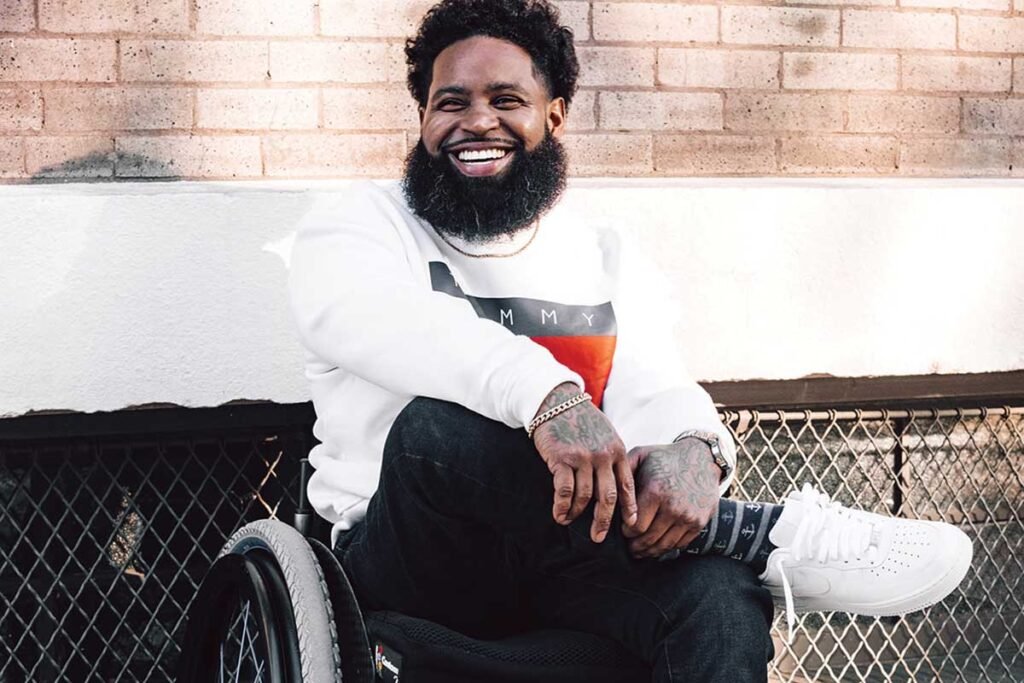
At the young age of 24, Wesley Hamilton uncovered an inner strength within himself and his family after facing sudden disability. Through his nonprofit organization, Disabled But Not Really, he inspires individuals in the disabled community to thrive through fitness, nutrition, and wellness rather than merely survive.
During his childhood in Kansas City, Wesley Hamilton rarely contemplated his future. He was acutely aware that the journey ahead for many African American men like him was likely to be challenging and filled with obstacles.
Sadly, his life took a drastic turn soon after he gained full custody of his young daughter and celebrated his 24th birthday. Following a verbal altercation while approaching his vehicle, he was shot multiple times, resulting in a severed spine and paralysis from the waist down.
Remarkably, it was while recovering in the hospital that Hamilton discovered a wellspring of resilience he hadn’t recognized before. “I’m thankful for my daughter being my motivation,” he reflects. “I just wanted to be active for her. Initially, I didn’t aim to change the world or influence others’ lives—that understanding evolved later.”
Embracing transformation
Despite being advised to stay in bed for 21 hours a day, Hamilton learned from his doctors that his weight was impeding his recovery due to his prior state of being overweight when he was injured. Adjusting to life in a wheelchair meant making significant lifestyle changes. “I resolved to either be defeated by the circumstances or to forge my own path,” he recalls.
With a strong desire to learn how to nourish his body for healing, Hamilton enrolled in a community college to study nutrition, a pursuit he quickly came to adore. Having grown up in a food desert, he understood the necessity of educating himself about healthy eating. “Even while on bed rest, I knew that the food choices I made could play an essential role in my recovery journey.”
The inception of a vision
By January 2015, having lost 100 pounds and developed a passion for fitness, Hamilton was poised to launch a new chapter in his life, ready to share his purpose with the disabled community. He didn’t just survive his injury—he began to flourish.
It was during his time in the hospital, fueled by determination and self-education, that his nonprofit organization, Disabled But Not Really (DBNR), was established.
Recognizing the potential to share his insights, he partnered with local gyms to create an eight-week program incorporating adaptive exercises tailored to the unique health needs of individuals with disabilities.
Reaching a broader audience
Hamilton’s narrative gained substantial visibility after he participated in season four of Netflix’s Queer Eye. “I believe viewers resonated with the authentic identity I aimed to portray,” he reflects on the experience.
“My hope is that it illustrated the diverse ways allyship can transform perceptions by encouraging openness. Having not lived with my disability my entire life, my previous understanding of disability has evolved. I truly believe in the potential for change, and after the show, many began to embrace that idea.”
While the initial fitness initiative and newfound recognition were promising, Hamilton recognized the need for a more comprehensive approach to wellness beyond mere repetitions and weights.
“Many individuals who approach us often lack confidence,” he explains. “While it’s a positive step to get them into a gym, it’s critical that the environment is accessible, welcoming, and diverse. You might gain the confidence to enter, but you may leave without it.”
For the disabled community, health is more than just a luxury—it’s a pathway to independence and a longer life.
Beyond mere statistics
Currently, over one in four adults in the US lives with a disability, with more than five million adults relying on wheelchairs. Unfortunately, these groups face a disproportionately high risk of cardiovascular diseases.
Research indicates that nearly half of wheelchair users with spinal cord injuries engage in no physical activity due to their condition, highlighting the urgent need for accessible exercise options for those in such situations.
“I always tell people I go to the gym to ensure I can stay active daily,” Hamilton states. “Sure, you might see me doing dips in my wheelchair and think it’s impressive. But my goal is to make transferring out of my chair easier. When I pick up a 20-pound weight, it’s about being able to manage my groceries independently. This lifestyle exemplifies how independence can be created, regardless of circumstances.”
A positive shift
Following his feature on Queer Eye, the onset of the pandemic brought renewed attention to the struggles individuals with disabilities encounter. With public spaces becoming less accessible, he transformed his garage into a gym, welcoming individuals seeking an inclusive environment.
Before long, “it became a melting pot of community,” Hamilton shares. “Not just those with disabilities attended, but also individuals who lost their gym access due to COVID. We cultivated an inclusive, diverse community organically.”
Building on the success of the garage initiative, DBNR launched its first physical wellness center in Kansas City, offering a range of services from personal training and nutrition workshops to self-awareness sessions and professional photography.
Additionally, the organization initiated the #HelpMeFit Challenge, a twelve-week program that pushes physical, emotional, and mental boundaries for sustainable outcomes. They also rolled out #HelpMeFit Mobile, a traveling gym designed to reach underserved areas lacking resources and introducing wellness initiatives.
Continuing to forge ahead
After engaging with countless individuals within the community, Hamilton has gained valuable insight into the progress still needed in society. “The dialogue continues in some areas, but it often remains at a comfort level rather than delving into uncomfortable truths,” he observes.
“We must intensify the conversations about understanding that disabilities manifest in various forms. Accessibility for one group, like those who are blind, doesn’t necessarily equate to provision for someone in a wheelchair. This awareness is essential.”
Hamilton’s journey has granted him a profound understanding of the strength that resides within each person, especially those who have faced adversity and emerged stronger. What inspires him most is “witnessing individuals surpass their physical limitations simply by realizing they can achieve more.”
“I embody what I lacked along my journey and the profound impact that support could have had on me. I’m driven to continuously educate and guide others, because disability is merely an aspect of who you are, not your entirety.”
● volunteer
● donate
● collaborate
For more information, visit disabledbutnotreally.org/give for details.
This piece was initially featured in the January-February 2024 issue of The Windows Club magazine (US edition).