For those acquainted with oysters, it’s common knowledge that the northern regions of the US are celebrated for their exquisite shellfish. Enthusiasts rave about the Beausoleils and Wellfleets from the East and extol the virtues of Kumamotos and Hama Hamas from the West.
However, when the topic shifts to Southeastern oysters, reactions often include disdain, skepticism, and strong disapproval. Oysters sourced from warmer waters? Not on my chilled ice platter. I must admit, I was once among these skeptics.
But a fortuitous meeting with Shark Bite oysters from New Smyrna Beach, Florida, changed my perspective entirely. At an Oyster South symposium in St. Augustine, I encountered a dedicated group of passionate entrepreneurs determined to elevate the status of Southern oysters, foster local economic growth, and improve environmental conditions.
I was graciously invited to spend a few days working on their farms. Armed with rubber boots and generous amounts of sunscreen, I eagerly made my way to the Atlantic and Gulf waters.
Day One: Gulf Adventures
As dawn breaks beautifully, I am welcomed by Reed Smith of the Calusa Oyster Company in South Tampa Bay. His eager partner, Reid Ballard, steers us towards their leasehold while Smith shares how he and his wife, Maura, essentially stumbled into the venture of oyster farming. “It seemed natural given my family’s love for seafood,” he remarks, gesturing to the sparkling water and clear blue skies. “You can’t beat the office view.”
Most oyster farming in the Southeast occurs “off-bottom” in estuarine waters where the tides continuously replenish nutrients. We glide past floating cages, each housing mesh bags filled with oysters at various growth stages.
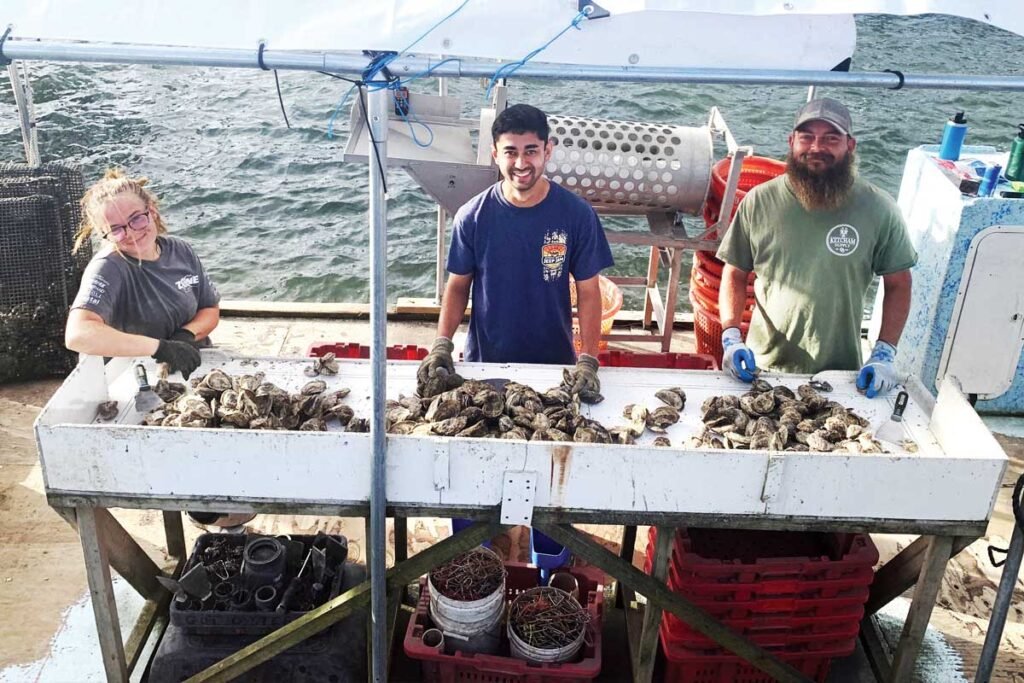
Our main focus for the day is harvesting. Retrieving a cage and extracting a flattened bag turns out to be quite a workout. Sea creatures cling to the structures, with seaweed, crabs, and tiny fish all around. “Our farm has become a floating reef,” Smith points out.
As the bags are processed in a rotating perforated cylinder to separate smaller oysters, some of these will be donated to Oyster River Ecology’s local restoration initiative, aiding the wild populations that are vital for ecological health. “Cultivation” is intended for eating, while “restoration” focuses on environmental benefits, Smith clarifies.
This somewhat tedious but necessary activity allows for conversations about the motivations behind this lifestyle. “Farming an animal that captures carbon, cleanses water, and creates habitats has shown me how much work is still required to maintain our environmental integrity,” Ballard explains. Smith adds, “It’s a joy to run a business that brings such happiness to people. Do you ever see someone not smiling when they eat oysters?”
Day Two: The Atlantic Experience
On the dock of the Indian River Lagoon, I am greeted by Nicolette Mariano of Treasure Coast Shellfish. As our small boat glides through the clear waters, she shares her long-standing interest in aquaculture since volunteering at the Florida Oceanographic Coastal Center as a teenager. Her academic background supports her enjoyment in this role. “I thrive on being out on the boat during early mornings, immersed in the sights and sounds… ospreys, dolphins, and manatees surfacing to breathe,” she notes.
Back at the dock, her team dons slickers to begin sorting and separating; damaged oysters are cast into shallows where fish gather to feed. Mariano highlights the local advantages stemming from the farm. “The oysters create a remarkable vertical habitat for juvenile species; the farm has truly become its own ecosystem. Plus, our operations have generated numerous jobs for community members of all ages.”
Facing Challenges
While navigating mortality events and complex regulations poses challenges, the most significant hurdle remains the weather. Hurricanes can devastate farms; for example, Smith’s Calusa Oyster Company suffered a year’s worth of work due to Hurricane Helene. “Perseverance, ingenuity, resilience, and adaptability are crucial. We find ways to manage these obstacles and keep moving forward,” he shares.
Support from the Florida Shellfish Aquaculture Association helps bolster these efforts. Executive Director Adrianne Johnson emphasizes their goal: “Shellfish farmers are some of the most resilient and innovative individuals. We aim to uplift this budding industry in the South and encourage people to engage with it. Sample a southern oyster, support local farmers, and taste the difference.”
Despite facing numerous obstacles, Ballard from Calusa expresses the sentiments of many farmers: “I wouldn’t exchange this job for a million dollars.”
This article was first published in the November/December 2025 issue of Thewindowsclubs magazine (US edition).