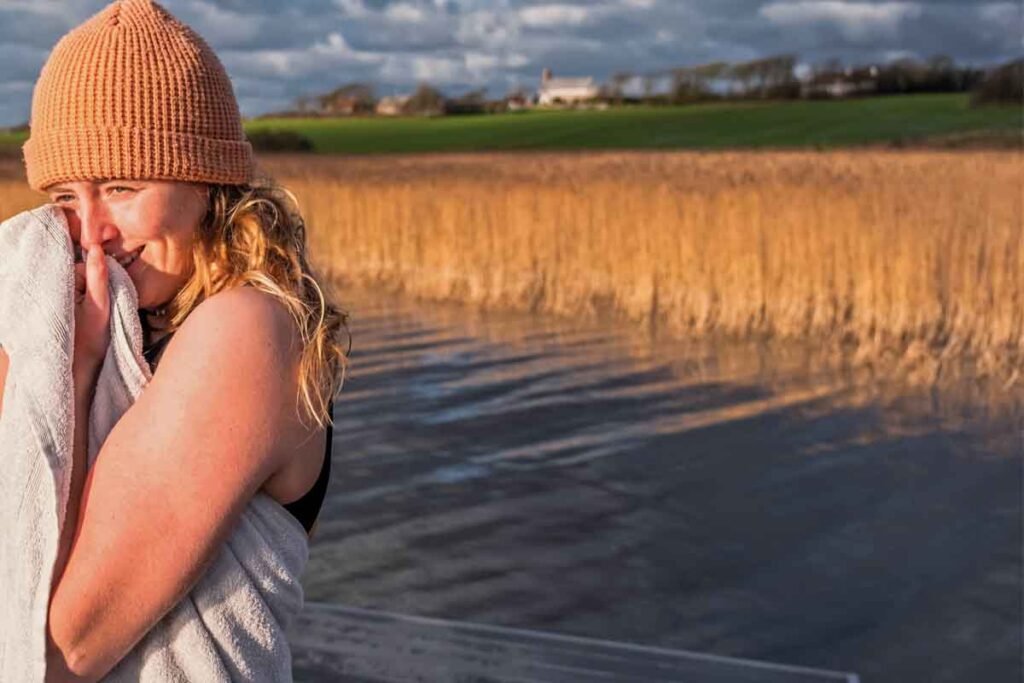
The persistent throb of Tianne Allan’s regular migraine fades away as she immerses herself in the chilly waters of Vancouver’s English Bay. Observing her serene expression, one might not guess that the water temperature hovers in the low single digits. Taking a moment to breathe deeply, she lets her gaze drift from the lush treetops of Stanley Park to the shimmering skyline dotted with glass skyscrapers. This brief 10-minute icy dip prepares her mentally for the day ahead.
“It sharpens my focus because the cold is incredibly invigorating,” Allan shares. “The expansive sky, the majestic mountains, the rhythm of the ocean—all of it brings a distinct sense of clarity and tranquility.”
Engaging with nature has been well-documented to facilitate mental recuperation and alleviate stress. However, most studies have concentrated on green areas, prompting an exploration into how blue environments—those dominated by water—impact our mental and physical wellness.
Mental Health Advantages
When Jody Radtke, MA, LPC, RCC, engages with a client during therapy, she is not sitting in a traditional office chair. For almost 20 years, this ecotherapist has been conducting sessions outdoors in Squamish, BC, guiding her clients to forge deeper connections with the natural world as a means of healing.
“Nature acts as my co-therapist,” Radtke explains. “Connecting with the natural environment allows us to explore different parts of ourselves.”
She recalls one instance where the soothing sounds of water interacting with rocks during a session significantly helped calm her client’s nervous system.
“Experiencing the tranquility of walking along a river or paddleboarding in the ocean, most individuals feel that serene connection,” she comments. “Sitting by a river illustrates the transient nature of life, teaching us to release, accept, and adapt. The symbolism embedded in these natural settings is profound and significant.”
Radtke’s observations about nature’s positive impact on well-being are supported by research. A review of 50 studies on blue spaces revealed that time spent near water fosters mental restoration, resulting in decreased stress, anxiety, and depressive symptoms.
The advantages derived from blue spaces extend beyond just the mind.
Physical Benefits
Cold water therapy effectively boosts metabolism and immune responses, mitigates muscle inflammation, and enhances cardiovascular health. However, immersion is not the only route to gain the therapeutic effects of water.
Aquatic environments, particularly where water splashes against surfaces—like beaches or waterfalls—generate negative air ions (NAI). Though research on the impact of NAIs is still developing and somewhat mixed, a narrative review of 187 studies suggests that exposure to NAIs could positively influence the body’s amino acid processing, potentially lowering inflammation, elevating antioxidant activity, and enhancing cellular energy production.
Regarding cold water immersion, Allan recognizes the effort required to enjoy the benefits of water. However, she believes it’s a challenge worth undertaking.
“It’s never an easy experience,” she admits. “But when you feel that rush of exhilaration and the accompanying clarity—feeling connected to the ocean, the mountains, and the sky—you realize it’s worth pushing through.”
This article was initially featured in the September 2025 issue of The windows club magazine.